ByJohn A
Off-Grid in Ontario Can Support Commercial and Remote Sites without a Traditional Utility Connection
Remote commercial sites rarely fail because of a single power outage. They fail because the cost of extending a line, maintaining it and waiting for repairs quietly outgrows the site itself. Going off-grid in Ontario has become a working answer for operators who need reliable power far from the nearest distribution network.
The pivot is simple once the numbers are laid out. Off-grid in Ontario gives commercial and remote operators a power supply sized to the actual site rather than to a utility’s service map, which means capital goes into generation and storage on the property instead of poles, trenching and easements that deliver nothing beyond a connection.
The Real Energy Requirements of Isolated Commercial Facilities
Remote Loads Run Longer than Most Operators Expect: An isolated commercial facility draws power around the clock even when nobody is on site. Cameras, gate controls, pumps, telemetry and frost protection all sit on continuous duty, and their combined draw sets the floor for every design decision that follows. Peak demand matters far less than the steady load that never switches off.
Waiting for a Line Extension Narrows Later Options: Line extension quotes rise with distance, terrain and permitting, and the figure climbs again once environmental screening enters the picture. In everyday field practice, installers routinely see operators who spent two seasons chasing a connection, then built a standalone system anyway at a higher cost, because equipment prices and labour rates moved while the file sat open.
Solar and Battery Systems Built around Security, Lighting and Site Loads
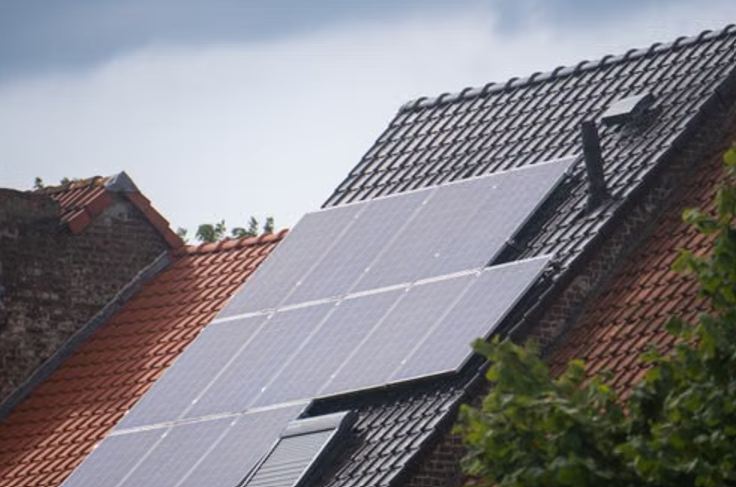
Security Equipment Suits Solar Better than Almost Any Load: Security equipment is one of the easiest loads to move off a utility feed because it draws small, predictable amounts of power day and night. A modest bank of photovoltaic modules paired with lithium storage will carry cameras, motion sensors and gate actuators through a full winter week without a single manual intervention.
Lighting Choices Decide How Big the Array Needs to Be: Lighting is where system size is won or lost. Switching yard and building lighting to LED fixtures with occupancy or dusk-to-dawn control can cut that load by well over half, which shrinks the array, the battery bank and the mounting structure at the same time. Efficiency work done first always costs less than generation added later.
Generator Backup Compared with Solar and Storage Alone
Generators Earn Their Place on Business-Critical Sites: A generator remains the practical choice for loads that cannot pause, such as refrigeration, process heating or a communications hub serving a wider area. Most working systems that go off-grid in Ontario use solar and storage for the daily load and hold a propane or diesel unit in reserve for extended cloud cover and deep winter.
Each Option Carries an Honest Trade-Off: Solar and storage cost more upfront and demand accurate sizing, yet they run with almost no attendance and no fuel deliveries. A generator is cheaper to buy and harder to live with, since it needs fuel on site, oil changes, exercise cycles and a plan for cold starts. Pairing them removes the weakness of each.
Designing for Reliability, Access and Long-Term Site Requirements
Site Assessment Sets the Ceiling on Everything Else: Nothing in the design holds up without an honest read of the site. Shading from tree lines, roof orientation, snow shedding and the local solar photovoltaic potential published by Natural Resources Canada all shift the yield estimate, and a system sized on optimism rather than site data disappoints in its first February.
Access Determines What Maintenance Is Realistic: Access drives the maintenance plan more than the equipment does. A site reached by winter road or boat needs components chosen for long service intervals, remote monitoring and simple field replacement. Well-designed installations that operate off-grid in Ontario are built so a routine check happens twice a year rather than twice a month.
Considerations Worth Settling before the Build Begins
Decisions That Shape the Final Specification: Most disappointing installations trace back to a decision made before any equipment arrived. Working through the points below with an installer, before a quote is signed, keeps the specification tied to how the site actually operates. Projects that go off-grid in Ontario succeed on planning quality far more than on brand choice or panel wattage.
- Record the site’s continuous winter load in watt-hours per day before anyone specifies hardware.
- Confirm CSA certification on every panel, inverter and battery to satisfy the Ontario Electrical Safety Code.
- Plan battery placement in a space that stays above freezing, since cold storage loses usable capacity.
- Budget for a generator interlock and transfer switch even if backup is added in a later phase.
- Check municipal zoning and building permit requirements early, as rural townships vary widely.
- Size the array for the worst month rather than the annual average.
See also: Buy Gmail PVA Accounts: A Practical Guide to Choosing Reliable Email Accounts
Power That Matches the Way a Site Actually Runs
A remote commercial site does not need a utility connection to run dependably. It needs generation sized to its real load, storage that carries it through the dark months, and a backup path for the work that cannot stop. Those three elements together deliver power that answers to the site rather than the grid.
Every season spent waiting on a line extension is a season of hauled fuel, lost recordings and equipment running on borrowed time. A site assessment is the sensible first step, so book one with a qualified renewable energy installer and map the load, the access and the budget before winter.